Touch phones from iPhone, HTCs and other brands have been around for a while, where as Nokia had not come up with their smart phones until recently. Nokia offers most of the latest technologies, but they have had a typical vintage ‘phone’ look. During February 2010, the buzz for open sources for mobile software and OS grew stronger with the merger of moblin (mobile linux from Intel) and maemo (FOSS initiative for mobiles and other handhelds from Nokia) and which gave birth to the Meego operating system. Both maemo and moblin could be installed on mobile phones and applications on these platforms could be developed in C/C++.
‘A Blessing in disguise’ – This is exactly what the IT/ITeS industry has to say about the recent recession. The 2008-2009 recession, followed by the collapse of the financial services bellwether, Lehman Brothers, has transformed the total dynamics of the industry. New business models evolved as customers squeezed their IT spend and demanded more work. They were perhaps right; the credit crunch had hit hard on their businesses and they were left with no choices apart from shoe-string budgets for IT-ITES needs. Vendors or outsourcing providers also responded in a similar fashion. But, the employees felt the heat most. Salaries were reduced, lot of employees were laid off and company budgets were reduced across the globe. By adopting such life-saving measures, most businesses were able to withstand the pressure. However, life hasn’t been the same ever since.
Have you ever wondered about an unexplainable change in your traffic, or thought “Why did my traffic spike on this day?” or “Where did all these visitors come from?”
Normally, after scratching your head you would probably go digging through your notes, calendar or spreadsheets to find out what caused the spikes in traffic. If that’s unsuccessful, you might try recollecting an event that triggered it. For example, there could have been a press release that caused a spike on a certain day. Or it could be due to some significant change made to your website like a tweak made to the design / page / content.
As per Google Android’s developer forum, Android 2.2 is indeed a minor platform release including user and developer features, API changes, and bug fixes. A reading on developer features and API changes can be had on Framework API section. Android 2.2 platform is available to developers as a downloadable component for the Android SDK and it includes a fully compliant Android library and system image, as well as a set of emulator skins and sample applications.
Businesses are embracing social media with a jest never seen before. Companies have realized the marketing/advertising potential offered by these viral networks and are clamoring to make the most of it. Small and large companies alike are striving to establish an online social presence to grab greater market share. The motto seems to be “Get out there before the competition.”
But “being out there” is not all! Social media is all about conversations, and conversations need to be listened to.
Are companies listening to the conversations that go on about them? If they aren’t, they could be in for a surprise.
The evolution of HTML has been in progress for close to two decades. The first version of the language released in the early 1990’s started off with just twelve HTML tags. The quantum of development that happened to this mark up language over the last few years is unprecedented. HTML5, the latest version of the same has come out with the some of the best possibilities with the language.
Do you wish to answer an incoming SMS, complete taking a friend’s picture, chat with your boss, answer a call, and then go back to keep playing a game, just where you left it before switching to any of those tasks? If you think this “resume” ability (or in iPhone lingo – “multitasking and fast app switching”) makes an OS golden, you will be happy to know that Apple is definitely going in the right direction. The iPhone 4.0 is almost here.
So, what makes iPhone 4.0 superior?
Why should I have it?
Open Source Application
Skipfish is an open source scanner written in C language used to detect vulnerabilities in web applications. Users can compile the code and execute it for installation. Skipfish crawls through the web application, detects the security probes and generates a report for security assessments.
The term ‘Cloud Computing’ has been creating a buzz in the Information Technology space for a couple of years. There are so many articles, blogs, pod-casts and web-casts available in the Internet about Cloud Computing. More and more companies are moving to tap the opportunity in it to stay competitive. Merrill Lynch predicts that Cloud Computing will be $95 billion industry in 5 years and 12% of the software industry would be pulled into it. So what’s Cloud Computing all about? Why is it considered as an unprecedented solution to reduce the IT costs?
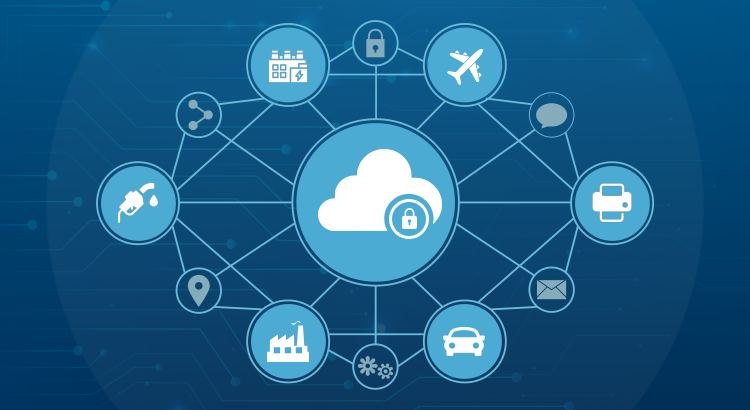
According to Wikipedia, Cloud Computing is “Internet-based computing, whereby shared resources, software and information are used by computers and other devices on-demand, like a traditional utility.” In simple words, we can say that, “The delivering of services that is hosted in the Internet”. Google Apps, Sales-force.com, Zoho web applications are all examples of services hosted in the Cloud. Amazon Elastic Compute Cloud (Amazon EC2) is another example of a web service that provides re-sizable computing capacity in the Cloud. The Internet is often represented in diagrams and flow charts by the Cloud symbol and from that the name has been derived.
Cloud Computing is broadly classified into three categories – 1. Software-as-a-Service (SaaS) 2. Infrastructure-as-a-Service (IaaS) 3. Platform as a Service (PaaS).
1. Software-as-a-Service (SaaS) – In Software-as-a-Service model, the vendor hosts applications on the server and it is distributed to the customers over the Internet. The price will be based on the usage of a subscription. It has been estimated that this model will be worth $15 billion by 2011 and take way more than 30% of the software market. Salesforce.com is a good example.
2. Infrastructure-as-a-Service (IaaS) – In this model, the vendor owns the infrastructure like storage, networking devices, hardware etc and will be responsible for facilitating and maintaining it. The user will pay for the service on the basis of the usage. This model is often helpful for web 2.0 start-ups who are keen on reducing their IT costs. IaaS model also helps companies to reduce their expenses in creating and maintaining data centers, which contributes heavily to the capital expenditure of the IT companies. Amazon web services is an example of IaaS model.
3. Platform as a Service (PaaS) – In PaaS, the vendor will host a set of software and product development tools on a provided space. The biggest advantage is that the user needs just a computer and internet connection to start building applications and he doesn’t have to worry about the infrastructure. Some vendors even provide pre-built business applications, which helps developers to build applications from the scratch. Google Apps is a perfect example for this model.
We have seen the different types of services offered in Cloud Computing. Now, the Cloud itself can be classified into three – Private, Public and Hybrid Clouds. In Public Clouds, the vendors offer services ranging from storage, servers and other services to different customers within the Cloud. The vendor can achieve ‘economies of scale’ through this endeavour and is considered as an effective pricing model even in recession. Data Security is an issue, which the vendors have to deal with and that is the only disadvantage these type of Clouds possess.
Private Clouds are often used by individual companies, who deal with service level issues and want data security. In Private Clouds, the particular company controls the access, the applications that run on the Cloud and the complete administration. They own all the facilities including networks and servers.
Hybrid Clouds are the combination of Private and Public Clouds, i.e., in a controlled way, the vendors use some part of the Cloud and share other parts. Hybrid Clouds are useful for customers who own simple applications that will not require any synchronization or have complex databases.
There is no doubt that Cloud Computing will revolutionize the entire IT Industry and it is just a matter of time before majority of the players move to this platform. By 2020, at least 40-50% of the entire software providers will embrace cloud computing.
There is good news for e-book lovers from Amazon.
Amazon’s kindle, a wireless electronic portable reader which facilitates e-book reading has now become more capsuled, making it more convenient for people on the go. BlackBerry users no longer need to carry a separate kindle to read their favorite e-books. Amazon, has now launched a Kindle app for BlackBerry, enabling the readers to purchase and read e-books.