Logo & Wordmark
Industries
Solutions
Services
Innovation & Insights
Company
Industries
Solutions
Services
Innovation & Insights
Company

Recognized for Growth. Trusted for Impact.

Tell us what you need help with.

Deloitte Technology Fast 50 India, Winner 2024

Deloitte Fast 50 India, Winner 2024

peak_matrix

Major Contender, QE Specialist Services

IDC-Logo-BeaconBlue 1

Market Glance: Loyalty in Retail, 2Q26, DEOT 4Q25

HFS Logo

Horizon 1 Disruptor, Data Modernization & AI Services, 2026


Logo & Wordmark
ISO
QBurst on X
QBurst on YouTube
QBurst on Facebook
QBurst on LinkedIn
QBurst on Instagram
IndustriesRetailRealtyHigh-TechHealthcareManufacturing
SolutionsDigital ExperienceIntelligent EnterpriseProduct EngineeringManaged AgentsModernization
ServicesExperience DesignDigital EngineeringDigital PlatformsData Engineering & AnalyticsApplied AICloudQuality EngineeringGlobal Capability CentersDigital Marketing
Innovation & InsightsBlogCase StudiesWhitepapersBrochures
CompanyLeadershipClientsPartnersCorporate ResponsibilityNews & MediaCareersOur LocationsGrowth Referral
  • Industries
  • Solutions
  • Services
  • Innovation & Insights
  • Company

© QBurst 2026. All Rights Reserved.

Privacy Policy

Cookies & Management

Certifications

  1. Innovation & Insights
  2. Resources
  3. Case Studies

Unifying Internal Retail Tools for a Retail Giant

QBurst partnered with a prominent retailer to build a client-specific enterprise design system in Figma that streamlined buyer and merchandising applications, accelerated feature delivery, and eliminated design debt.

Client

The client is a major US retail supermarket chain operating an extensive network of discount grocery locations, supported by complex internal buyer portals and merchandising management software.

Problem Statement

The client's internal buyer and merchandising tools suffered from severe UI fragmentation and design debt caused by independent team builds. This forced teams to spend 25–30% of their effort and 3–5 weeks per project on redundant design and engineering rework.

Industry

Retail

Solution

Digital Experience

Modernization

cover-unifying-internal-retail-tools-for-a-retail-giant
Download PDF

Quick Summary

QBurst built a governed, scalable design foundation to unify the client’s enterprise applications.

  • 50% Faster Sprint Cycles: Reduced sprint timelines from 3–4 weeks down to ~2 weeks, saving 12+ development weeks per team annually.
  • 40+ Governed Components: Replaced ad hoc, one-off interfaces with a centralized library of Figma tokens, variants, and responsive components.

Client Profile

A leading US-based discount closeout retailer with supermarkets that offer discounted, overstocked, and closeout products from name-brand and private-label suppliers.

UI Fragmentation and Inefficient Delivery Pipelines

As internal tools evolved, disparate product teams introduced uncoordinated UI patterns across critical operations like vendor pricing, inventory, and purchase orders.

Inconsistent User Experience: Lack of a shared visual language led to cluttered interfaces, dense unstandardized tables, and mismatched interaction patterns.

Redundant Design and Engineering Effort: Similar UI elements were designed and built multiple times, consuming valuable sprint hours on solved problems.

High QA Overhead: Quality assurance teams spent excessive time identifying visual inconsistencies prior to release, delaying launch dates.

Friction in Design-to-Dev Handoff: Engineers frequently required back-and-forth clarification due to missing design standards and static spec handoffs.
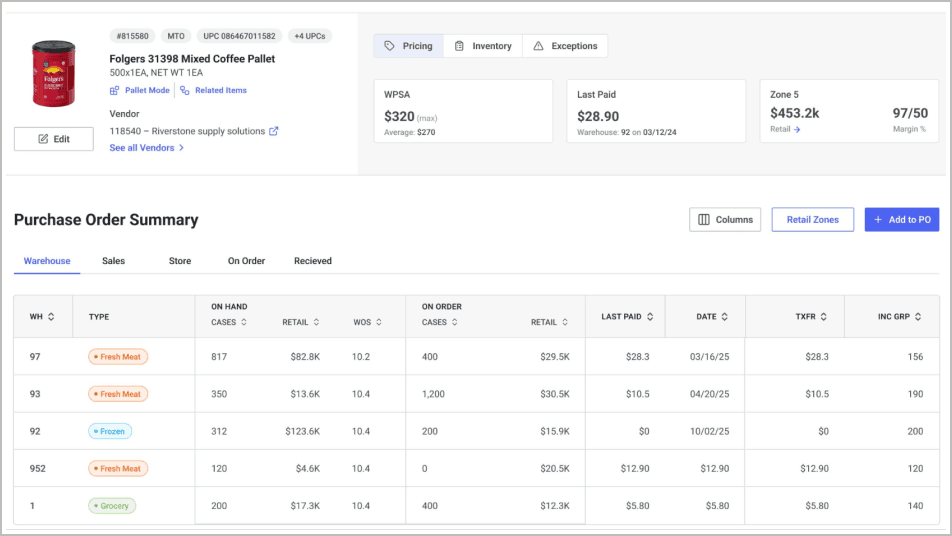
unifying-internal-retail-tools-for-a-retail-giant-1
Before — a product details screen prior to the platform: dense tables, inconsistent styling, no shared components.

Unified Design System

We co-created a client-specific design system in Figma, establishing a governed, scalable single source of truth that aligns product, design, and engineering teams. Five Figma capabilities did the core of the work.

  • Token Infrastructure via Figma Variables: Architected foundation tokens (colors, spacing) and semantic tokens (action states) within Figma Variables, ensuring global style updates propagate automatically across all screens.
  • Standardized Component Library: Built a robust kit of 40+ reusable components—including buttons, inputs, modals, alerts, tables, tabs, and panels—complete with explicit default, hover, and focused state variants.
  • Centralized Library Access: Published shared libraries accessible to every internal product team, ending isolated, ad hoc component creation.
  • Dev Mode Integration & Governance: Implemented Figma Dev Mode for direct token inspection by developers, paired with a design-led governance model to audit, document, and gate new library additions. The governance model subsequently evolved into a collaborative contribution framework, enabling federated product teams to propose and evolve shared components.
  • Executive & Cross-Functional Alignment: Led direct alignment sessions with the client’s leadership team to secure operational buy-in across Product, Engineering, Design, and Delivery prior to rollout.

The successful platform rollout also paved the way for token-to-code automation, with engineering initiating work to sync Figma Variables directly into front-end codebases and extend the single source of truth into development. 
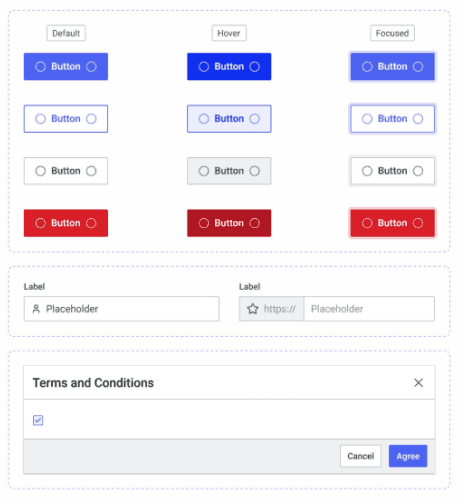
 

Unifying Internal Retail Tools for a Retail Giant
Sample platform components used: Buttons, inputs, and modals, each with default, hover, and focused states.

Technical Highlights

  • Semantic Token Mapping: Built multi-tiered Figma Variable structures mapping raw foundation values directly to functional UI semantics.
  • Auto Layout Component Engineering: Standardized table structures, modal behaviors, and responsive container rules using Figma Auto Layout.
  • Inspection-Ready Dev Mode Setup: Structured component variants and token names to align directly with front-end code properties, removing redline handoff friction.

Accelerated Delivery and Operational Efficiency

  • Accelerated Sprint Velocity: Shortened release sprints from 3–4 weeks to 2 weeks, recovering over 12 weeks of productive capacity per team annually.
  • 20–25% Reduction in Handoff Friction: Decreased design-to-development clarification cycles through shared tokens and Dev Mode inspection.
  • Eliminated Redundant Rework: Replaced isolated UI builds with 40+ production-ready components, recovering the 25–30% of design effort previously lost to UI debt.
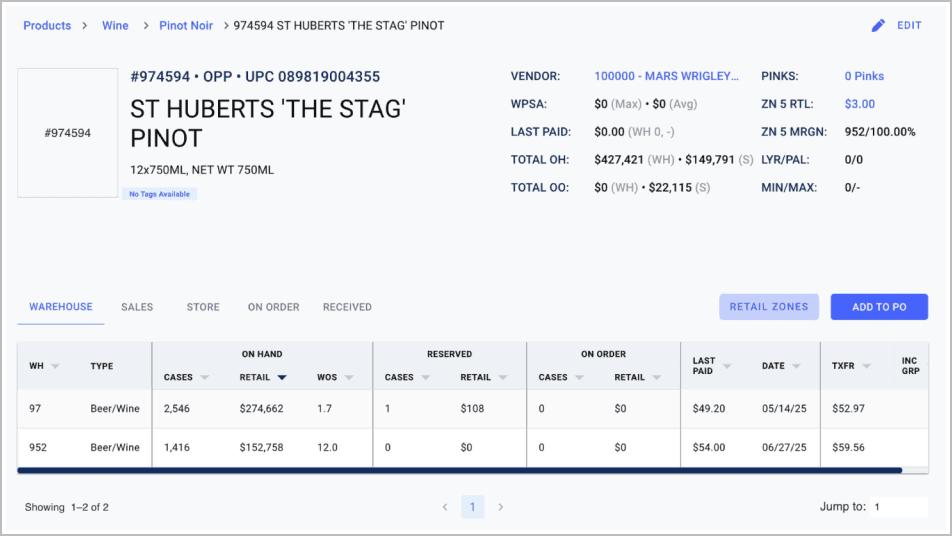
unifying-internal-retail-tools-for-a-retail-giant-2.png
After — A product details screen rebuilt with Figma components: consistent typography, spacing, and structured data.

Client Profile

Challenges

Solution

Technical Highlights

Impact