01:
Read the Legacy Estate
Analyzes source code, documentation, schemas, and integration artifacts using AST analysis and call graphs.

High AI Qatalyst matches the approach to each application: a quick, pattern-led upgrade when the path is clear and a comprehensive architectural analysis for high-risk systems. Find the right strategy for your application.
Assess the portfolio and read the code as deep as the risk requires.
Turn what you learned into one shared, verifiable specification.
Build, test, and run the modernized system against that specification.



You need an approach that adapts to your application's exact complexity while keeping your architects in total control.
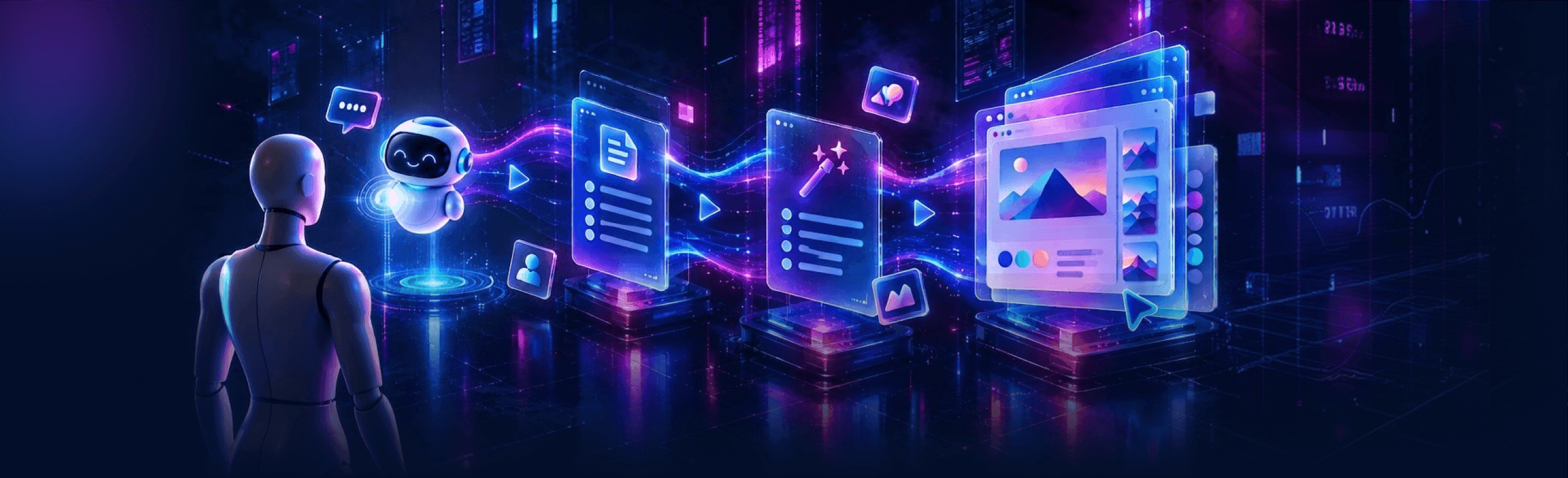
Our approach to application modernization embeds AI across a structured, three-stage lifecycle while keeping your team in complete control of key decisions. From routine framework upgrades to complex core rebuilds, our process adapts its analytical depth without altering its operational rigor, ensuring predictable, safe modernization at scale.
Architects and AI-assisted agents analyze your portfolio to surface complexity, dependencies, and risks, mapping every application to its optimal modernization pathway.
The findings become a structured, human-readable system model and a formal specification. It defines intent, behavior, constraints, and architectural boundaries, and it governs everything that follows.
Using the specification as a single source of truth, teams and AI capabilities build, test, and release applications directly onto modern cloud-native runtimes.
When systems are poorly documented, and the cost of a wrong assumption is high, guesswork isn't an option. Proprietary reverse-engineering agents reconstruct true system behavior—replacing tribal knowledge with verifiable evidence.
For a framework upgrade or a well-understood re-platform, Qatalyst skips the heavy lifting and goes straight to pattern-based transformation.
Modernization doesn't happen in isolation. A single specification drives your UI, code, tests, data, and middleware to evolve together, eliminating architecture drift and keeping every layer perfectly aligned.
User journeys come straight from the model, so they reflect real business processes.
Stories and flows grounded in how the system actually works.
Form-driven steps become intent-driven dialogue, which helps users.
Interfaces adapt to role, task, and system state.
Speed up the modernization with purpose-built tools that automate complex transformation tasks and reduce manual effort.
Partner platforms plug into it at every stage, from analysis to code generation. We select partner tools based on application archetype and integrate them across all three stages. They augment the method and never replace it.

Scans and analyzes multi-application portfolios at scale to map system dependencies, evaluate technical health, and auto-generate tailored cloud migration and modernization roadmaps for every application.

Deep system modeling that extracts and documents hidden business rules directly from source code—including legacy languages like COBOL—turning opaque, legacy codebases into structured, actionable system intelligence.

Enterprise-grade AI agents that translate business specifications directly into production-ready code. Operates natively within client toolchains while enforcing strict security, governance, and architectural guardrails.

The High AI Qatalyst MOD framework is QBurst’s AI-driven framework for modernizing legacy applications. It embeds AI across the lifecycle in three stages: Understand, Specify, and Transform. Architects and engineers control every decision, while AI agents handle analysis, specification, code generation, and testing.
The High AI Qatalyst MOD framework matches the approach to each application instead of applying one method to everything. Lift-and-shift often carries existing complexity into a new environment, and rewrites are slow, costly, and disruptive. Qatalyst assigns each application a pathway (re-platform, refactor, re-architect, or retire) and tailors the depth of analysis to its risk.
High AI Qatalyst MOD structures modernization into three core phases:
The High AI Qatalyst MOD categorizes applications into three distinct archetypes based on complexity and risk:
Target states include cloud-native architectures on AWS, Azure, and GCP; microservices; API-first integrations; and event-driven systems. Select data targets by use case: relational databases like PostgreSQL or MySQL for transactional workloads, columnar stores for analytics, document stores for flexible or nested records, and object or blob storage for files and unstructured content. Messaging can shift to lightweight brokers such as Kafka, RabbitMQ, or cloud-native queues.
Yes. For well-understood changes, such as a framework upgrade or a re-platform, Qatalyst uses automated analysis and proven transformation patterns with minimal discovery. For monolith decomposition or mission-critical systems, it adds deeper analysis. The three stages stay the same, and only the depth changes.
No. The same specification that guides application modernization also guides databases, middleware, and integration layers.
It replaces assumptions with evidence. Reverse engineering and dependency analysis make business rules and system dependencies explicit before code generation. Stakeholders validate the specification, automated tools generate tests from it, and teams move high-risk systems in phases with rollback plans and parallel runs.
AI Qatalyst never relies on brittle line-by-line translation. Instead, AI agents reconstruct your system’s actual behavior—including workflows, business rules, data semantics, and integration contracts—into a clear, human-readable model. Your engineers validate this specification, ensuring every critical behavior carries forward into the new architecture.