
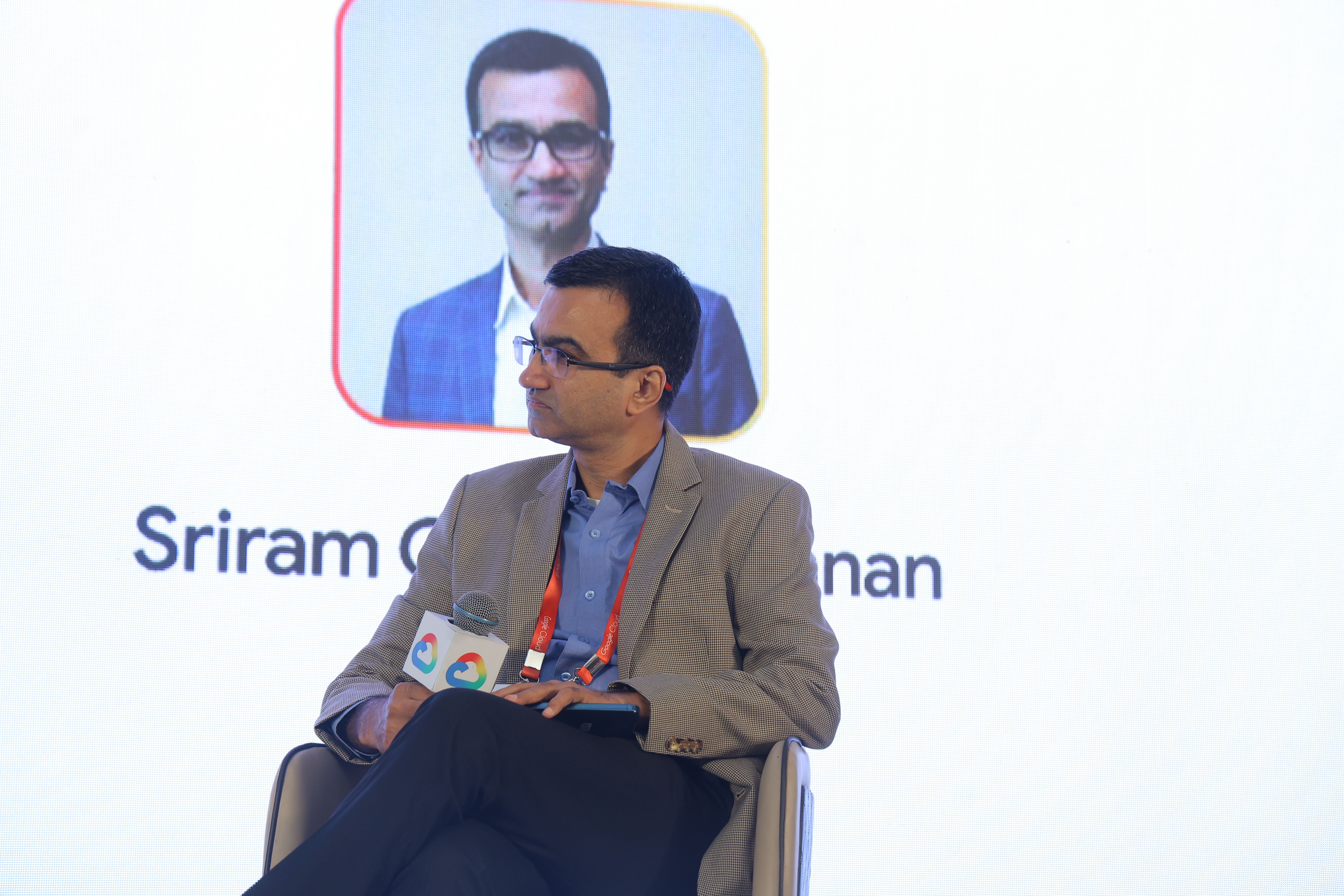
The shifting economics of building a modern software business took center stage at Google Cloud’s Build with AI for Startups summit in Chennai on 24 June, anchored by a panel discussion titled, "The Agentic Pivot: Engineering the $1B Lean Startup."
The session brought together cloud architects, early-stage founders, and institutional investors to debate how this shift alters operational costs, competitive advantage, and enterprise trust.
Representing the digital engineering and IT services sector, Sriram Gopalakrishnan (SGK), COO at QBurst, noted that longstanding headcount-driven delivery models are fundamentally changing as intelligent agents absorb routine development workflows. This shift requires established firms to upskill their human workforce to focus on complex system orchestration and governance. However, he cautioned enterprise buyers against expecting overnight cost reductions, noting that meaningful returns require heavy upfront investments in data foundations, tooling, and training.
Addressing fears regarding data privacy and AI wrappers, SGK argued that public AI failures are almost always data-readiness failures. Rather than building outward from a trendy Large Language Model, QBurst prioritizes data modernization first. Once the strong data foundation is built, the underlying models can be easily swapped out as technology evolves.
To ensure absolute data privacy, QBurst uses its internal Managed Agents™ Platform, which has built-in security guardrails, cost controls, and tracking tools. Instead of letting an AI absorb private information, QBurst builds secure corporate vaults on the cloud where the client's data stays completely isolated within their own secure environment. It is never mixed with public data and is never used to train public AI models.
On the question of end-user trust, SGK emphasized that precision cannot be left to the model alone. QBurst addresses this by grounding AI in verified client records, ensuring clear observability, and keeping humans in the loop for high-stakes decisions.